The First Ten Minutes (Yes, Really, Ten Minutes)
What is the first thing you should do? Kill the water. Not the dishwasher, the water. Reach under your sink and turn the small valve on the hot water supply line clockwise until it stops. Most dishwashers tee off the hot side, and shutting that valve cuts the source even if the appliance keeps trying to fill. Cannot find the valve, or it will not budge? Go to your main shutoff. Better to lose a shower for an hour than to keep feeding the flood.
Now kill the power. Pop the breaker labeled "dishwasher" or "kitchen," because standing water plus a live appliance is a combination nobody wants. Do not yank the plug if your hand has to go near the water. Just flip the breaker.
With water and power off, grab every towel you own. Old beach towels, that pile of clean rags in the garage, the bath mats, all of it. Soak, wring into the sink, repeat. Why not a shop vac? Use one if you have it, absolutely. But towels work the same and you already own them. The goal here is simple: get standing water off the floor before it has more time to migrate. Every minute you spend sopping up surface water is a minute that water is not soaking deeper into your subfloor and joists.
Open the dishwasher. There is probably an inch or two of standing water inside the tub. Scoop it out with a measuring cup into the sink. Do not let it run out across your floor when you finally pull the unit.
One thing people forget in the panic: pull the bottom rack out and check the filter basket at the back of the tub. If it is clogged with glass shards, a chunk of label from a wine bottle, or a popcorn kernel that wedged into the drain pump, you just found your cause. Knowing why it flooded matters, because if you call Tipton Water Restoration and say "it just started leaking," the first question we ask is whether the unit overfilled or whether water came from underneath. Those are two very different problems with two very different repair paths.
What You Cannot See Is the Real Problem
Here is where homeowners get burned. The visible water dries in a day, the floor looks fine, and three weeks later you smell something musty. Or your hardwood starts cupping. Or the cabinet base softens. Sound familiar to anyone you know? That is because dishwasher water travels along the path of least resistance, which in most Tipton kitchens means under the toe kick, into the cavity below the cabinet, and across the subfloor toward the dining room.
You cannot dry what you cannot reach. The pad of insulation under your dishwasher, the particle board cabinet bottoms, the seam where your hardwood meets the kitchen island, all of those hold moisture for days. That is the window where mold gets started, and once it does, you are looking at a much bigger project. The 48 hour mold rule is not marketing. It is how fast spores actually colonize wet cellulose at room temperature.
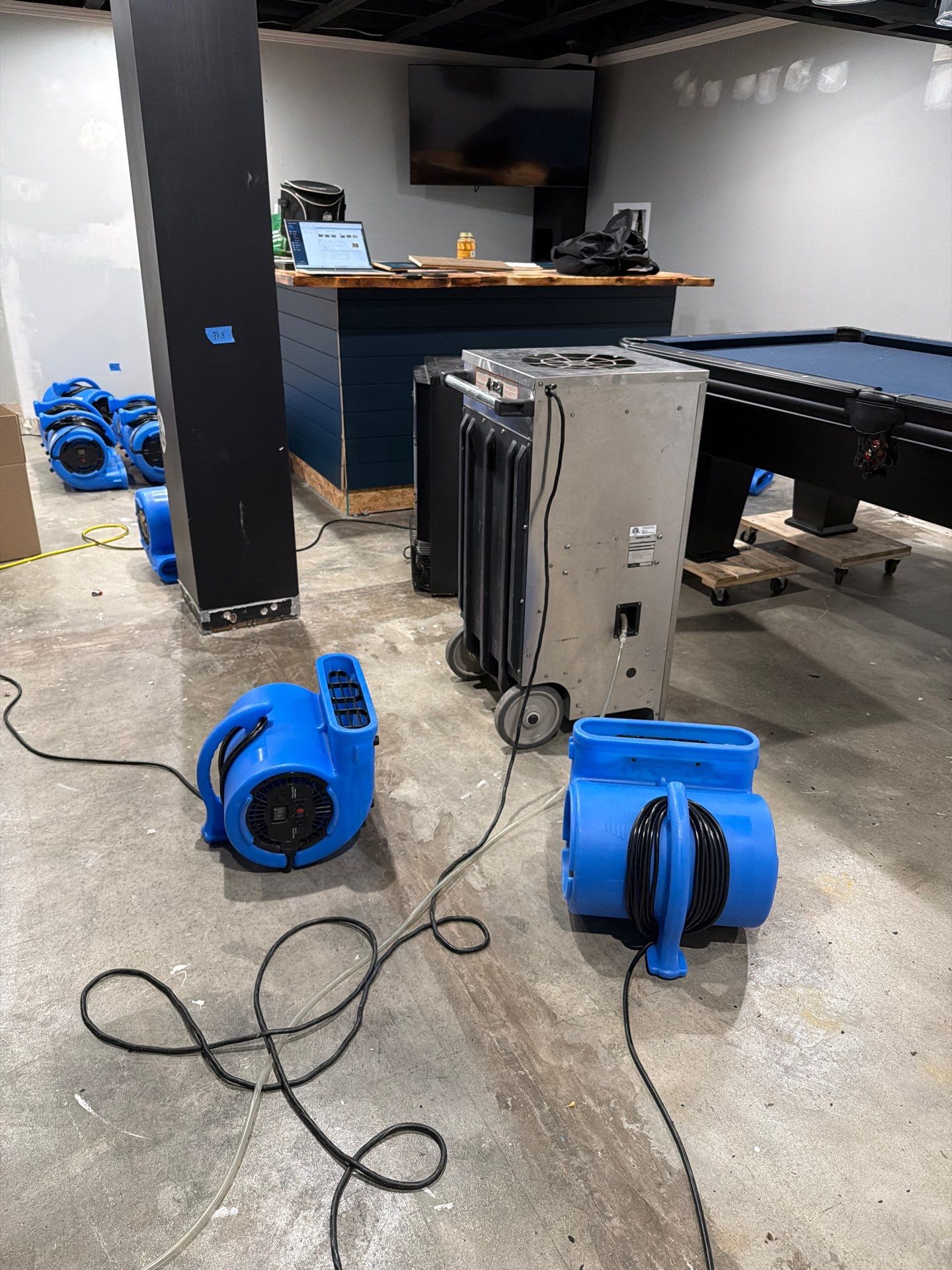
So when do you call someone with meters and air movers? Honestly, if more than a gallon escaped, or if any water reached a cabinet, baseboard, or adjacent room, you want a professional moisture reading before you assume you are dry. We bring thermal cameras and pin meters that tell us in five minutes whether your subfloor is at 8% or 22% moisture content. One is fine. The other will fail in six months.
What about the basement, if you have one? Walk down and look at the ceiling directly under your kitchen. See any staining, sagging drywall tape, or a wet light fixture? That tells you water made it through the subfloor and is now sitting in your joist bay. At that point you are no longer dealing with a kitchen problem, you are dealing with a two floor problem, and the drying strategy changes completely. Tipton Water Restoration dispatches a crew within 2 hours for situations like that because every additional hour means more material we cannot save.
Stopping the Next One Before It Happens
Want to never read this article again? Three habits will get you most of the way there. First, look at your supply line. Is it a 20 year old braided steel hose with rust at the fittings, or a newer one? Replace it every five to seven years, cheap insurance. Second, check the door gasket once a season. Run your finger around the seal and look for cracks, food debris, or hardened spots where it no longer compresses. A $15 gasket beats a $5,000 floor replacement. Third, run the dishwasher when you are home and awake, not overnight or while you are at work. If it fails, you want to be there to catch it in minute one, not hour eight.
A few bonus habits worth picking up. Clean the filter monthly, not yearly. A clogged filter forces the pump to work harder and pushes water past seals that were never designed for that pressure. Wipe the door edges after the final cycle, because trapped moisture there is what hardens the gasket in the first place. And once a year, pull the kick plate off the front of the unit and shine a flashlight underneath. You are looking for a dried mineral trail, a rust stain, or any sign that water has been weeping where it should not. Catching a slow drip at that stage is a ten dollar fix. Catching it after the floor warps is not.
If you live in an older Tipton home with original hardwood, consider putting a simple leak detector puck under the dishwasher. They run about $20, take a battery, and scream like a smoke alarm the second they touch water. For around $80 you can get one that shuts off the supply valve automatically. That is the kind of upgrade that pays for itself the first time a hose lets go at 2 a.m.
One more thing worth knowing: most homeowners policies cover sudden dishwasher floods, but not gradual leaks. If you suspect this has been happening slowly for weeks, document everything with photos before you start cleanup, and read up on filing a water damage claim before you call your adjuster.